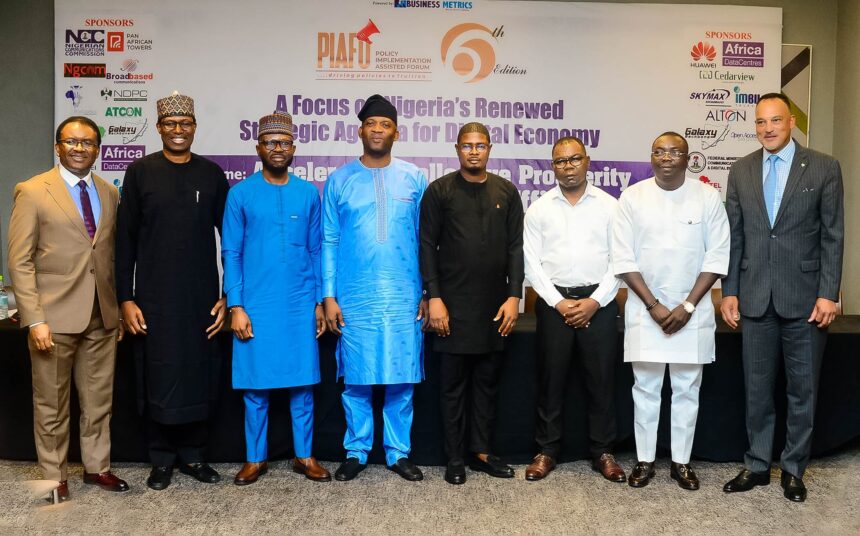
Stakeholders that gathered for the 7th edition of the Policy Implementation Assisted Forum (PIAFo) held in Lagos unanimously agreed on the need for more action from the government and private sector participants in giving physical interpretation to the declaration of telecom infrastructure as Critical National Infrastructure (CNI).
The participants, who applauded the federal government for the assent, noted that until there is a show of implementation to the penalties associated with the destruction of telecom infrastructure, such challenges as fibre cuts, obstruction of work on masts and base station sites, destruction of infrastructure and unnecessary financial demands on operators, may continue unhindered.
They called on State governments across the country to collaborate with telecom service providers to ensure that their states are not left behind in the wave of development and digital empowerment.
In his welcome address, the organizer and Mr. Omobayo Azeez noted that the passage of the Critical National Information Infrastructure (CNII) Order in August 2024, was a testament to the power of collaborative advocacy, which involved telecommunications operators, associations, regulators, and ICT journalists that championed the cause.

He further charged: “However, our work is far from being over. The CNII Order’s implementation requires a concerted effort from all stakeholders to protect the over $76.5 billion investments in Nigeria’s telecom space. We must leverage this breakthrough to prevent incessant fibre cuts, nationwide services outages, financial losses to attacks and ensure the safety of our base stations.”
The rampant cuts in fibre infrastructure in the country and the incessant obstruction and thefts at Base Transceiver Station (BTS) have become a major challenge and a source of worry to operators.
Speaking on a panel session, Chairman of the Association of Licensed Telecommunications Operators of Nigeria (ALTON), Engr. Gbenga Adebayo, specifically pointed out that the high cost of doing business in some states due to their demands is a major concern and increases the operators’ capital expenditure in those states, compared to other states. He suggested that if negotiating with certain states to reduce these costs and protect the infrastructure located in the states fail, then the added operating expense should be infused into the service charges in those areas.
“We may have to reconsider the issue of our national tariffs and look at regional tariffs. If you are aware that the cost of doing business is high in a particular state and it’s impossible to negotiate with them, factor the cost of deployment in those areas into the cost of providing services,” he said.
In a similar proposal, President, Association of Telecommunications Companies of Nigeria (ATCON), Tony Emoekpere, agreed that the current national tariff is unfair because operational costs are not the same across the country.
He believes that states that make it easier for telecom companies to operate should be rewarded, while those that create difficulties should see higher service costs.
On security of the infrastructure across the country, stakeholders advocated for a strategic meeting which will bring together, the CNII implementation body, the Office of the National Security Adviser (ONSA); Heads of civil society organisations; the Nigeria Security and Civil Defence Corps (NSCDC); telecom operators; State security heads, among others. The meeting will seek ways of implementing the CNII.
The theme of the summit was, “Strengthening Protection of Critical Information Infrastructure through Proactive Implementation and Strategic Coordination”.