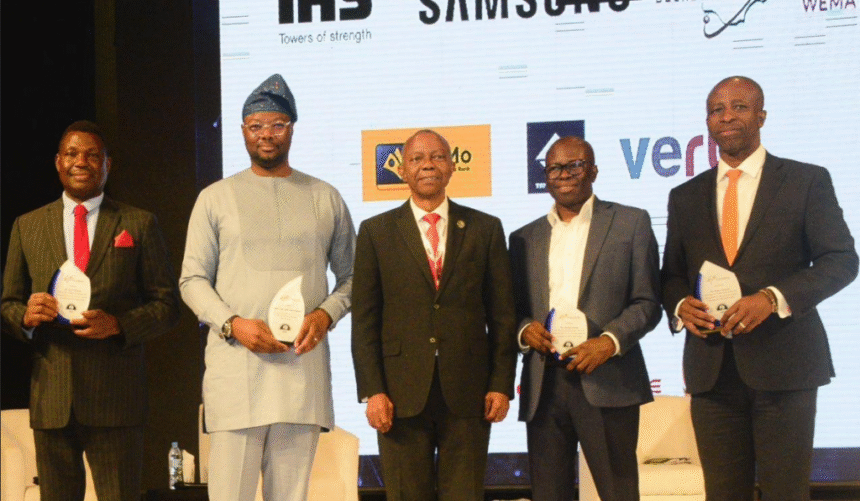
The Managing Director of Remita Payment Services Limited, Mr. Aderemi Atanda, joined other prominent leaders in the technology, finance, and policy sectors at the recently concluded ICTEL EXPO 2025, for a pivotal conversation on advancing Africa’s economic future.
Speaking during a high-level panel session at the event hosted by the Lagos Chamber of Commerce and Industry (LCCI), Mr. Atanda delivered an intervention on the structural gaps slowing SME growth in Nigeria and the urgent need for a coordinated national approach to digital enablement.
With the session focused on harnessing financial technology to unlock Africa’s development potential, Mr. Atanda made a case for national alignment in policy, technology, and infrastructure.
“The real conversation isn’t about how many platforms we have. It’s about whether Nigeria has a national strategy for SMEs in the digital age,” he stated. “Once that is defined, the role of regulators, fintechs, logistics players, and government becomes clearer and more impactful.”

He highlighted how fintech platforms are helping SMEs transcend traditional barriers. From enabling cross-border payments to improving digital visibility, technology has expanded opportunities for small businesses that previously operated in geographic isolation.
“A business in Aba can now serve a customer in Accra, because payment rails make it possible. That’s real change,” he noted.
Now in its 11th edition, ICTEL EXPO has become a flagship platform for dissecting Africa’s innovation landscape, and this year’s theme, “Leveraging Technology for Innovation and Development in Africa,” brought a fresh urgency to long-standing conversations.
As SMEs continue to contribute over 48% to Nigeria’s GDP and employ more than 80% of the workforce, stakeholders gathered to explore how digital infrastructure, fintech innovation, and regulatory reform can accelerate this segment’s transformation.
The 2025 event attracted hundreds of participants across sectors, reaffirming the role of technology as the engine of inclusive and sustainable economic development across the continent.
Mr. Atanda also cautioned that the progress made in digital innovation and financial inclusion cannot be sustained in a fragmented ecosystem.
While there have been notable advances, such as increased digital payments, tech-driven services, and broader access to financial tools, these gains risk being undermined by the lack of coordination among key institutions.
“We’re seeing duplication where we need direction. Innovation must be guided by a shared vision that links digital solutions to national economic goals,” Mr. Atanda warned.