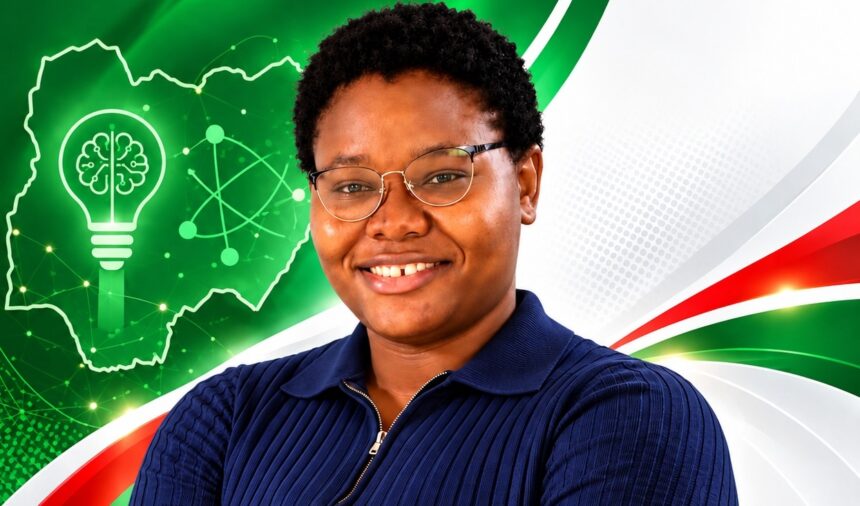
By CHIDIEBERE NWANKWO
Following her winning of the 2026 Nigeria Prize for Science and Innovation (NPSI) initiated by the NLNG, Founder of GenScanAI, Mary-Brenda Akoda, says she is, among other things, waiting for regulatory approval for her winning entry, the GenMRI, before it can be used in radiology and imaging centers in Nigeria.
The $100,000 award-winning innovation, GenMRI, is an artificial intelligence-powered medical imaging solution that can reduce magnetic resonance imaging (MRI) scan time by up to 90%, improve image quality and enhance healthcare delivery without requiring new MRI hardware.
The Software-as-a-Medical-Device (SaaMD) innovation boasts the advantage of, not only reducing the imaging time, thereby saving lives when it mattered, but also allowing continuous imaging even when the patient is not static, a condition that would have forced radiologists to repeat MRI imaging.

Speaking in an exclusive interview with eBusinessLife, Mary-Brenda Akoda enumerated the hurdles the solution still has to go through in Nigeria before usage.
In her words: “So even though it’s not hardware, it still needs to go through regulatory approval, still needs a broader clinical validation before it gets to deployment. So currently, we’re working with clinical partners towards that regulatory approval. Also the activities, the broader clinical validation activities needed for that.”
She noted that the Minister of Education made a pledge to bring the Minister of Health on board and as well, the Chairman of the Committee of Chief Medical Directors of the Federal Tertiary Institutes.
The Innovation is already in the process of acquiring a provisional patent in the US, which will enable it acquire a Patent Cooperation Treaty (PCT), an international treaty managed by the World Intellectual Property Organization (WIPO) that lets inventors file a single international patent application to seek protection across multiple countries.
Speaking on the steps taken so far, Mary-Brenda Akoda stated: “We also recently won the backing in the UK, the Entrepreneurs Award in Social Innovation. And we’re part of the NHS, so the National Health Service in the UK, the NHS Clinical Entrepreneur Program. So we have external backing basically.
It would be preferred for Nigeria to be one of the first, yes, to be a priority instead of an afterthought because of course we would want that to be the case. But we are a global company, so it’s not limited to Nigeria. Whatever happens within Nigeria, we do hope that pushes things to the next stage.
But we are seeking international funders and we continue to pursue our activities. But even before that, we do have to get regulatory approval first.”
Akoda explained that to come out with the GenMRI innovation, GenScanAI ran over 8,800 MRI images, with conventional MRI similarity validation of up to 99.7% across different levels of speed-up, from 4x speed-up up to 10x speed-up.
She further noted that recently conducted early independent blinded assessment by a consultant radiologist at Buckinghamshire Healthcare NHS Trust in UK scored the GenMRI images as diagnostically equivalent to the conventional MRI images in all of the cases assessed. This is despite the 10x speed-up, and up to 90% scan time reduction for the GenMRI images.
“So that basically proved that we had overcome that hurdle, ensuring that it’s not hallucinating and it’s anchored in the patient’s data,” Akoda surmised.
She further buttressed on the vision of the innovative GenMRI, noting that patients should not suffer or die because of a delayed diagnosis. “So everything about GenScan AI works towards that mission, works towards that vision. We are looking at how do we shorten the time from when a patient gets referred to when they are able to get a diagnosis and get treated.
So, GenMRI is a flagship technology that makes MRI scans up to 90% faster from 20 minutes to 2 minutes on existing scanners. This is just our flagship technology and it is extendable to computed tomography Scan (CT Scan) as well, it’s extendable to FET scan as well. The underlying research is extendable to other imaging modalities.”
“But yeah, and this happens on existing scanners. So it allows healthcare providers to be able to scan a lot more patients, to be able to cut down on the waiting times, and to be able to get patients to diagnosis and treatment sooner.”
She also hinted that with the gradual deployment of portable MRI scanners in health facilities, GenMRI can help maintain scan quality as well as time reduction. MRI is non-invasive and it doesn’t have the radiation issues that CT scans have.
She applauded the NLNG-led Nigeria Prize for Science and Innovation (NPSI) for bringing this particular innovation, genomic MRI, to the notice of the federal government and other stakeholders in Nigeria.