Lagos State government says that the state has attracted about $3.9 billion in venture funding over the past five years as it works towards becoming one of Africa’s leading technology and innovation centres.
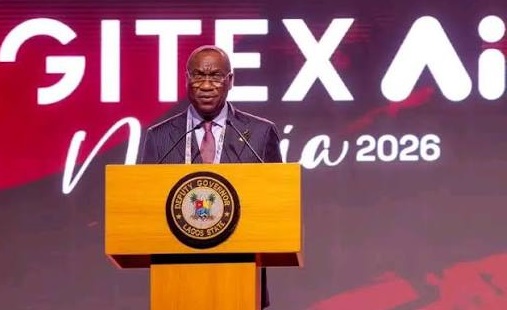
Speaking at the opening of technology Exhibition, GITEX Nigeria 2026 on Wednesday in Lagos, Deputy Governor, Kadri Obafemi Hamzat noted that the State has produced unicorns across fintech, logistics and e-commerce, with companies that started locally expanding into several markets.
According to him, Lagos would rank as the sixth-largest economy in Africa if it were a country. He also said the city has one of the largest startup ecosystems in sub-Saharan Africa and ranks highly among African cities globally.
Its startup ecosystem, he said, has an estimated asset value of about $9 billion and attracted roughly $3.9 billion in venture funding over five years.

Hamzat, who represented Governor Babajide Sanwo-Olu at the opening ceremony disclosed that the decision to bring GITEX Nigeria to Lagos showed the city’s economic importance rather than its ease of doing business.
Hamzat said GITEX had spent more than four decades following where the technology industry was growing. He argued that the decision to establish a Nigerian edition in Lagos followed the same principle.
“When GITEX came to Nigeria, when Lagos became its commercial anchor, that was not an experiment for us. It was a commercial judgement to choose Lagos because we don’t look at exhibitions for its market alone. We look at its capital and network.”
For Lagos, he said, the goal now extends beyond its status as Nigeria’s commercial capital. The state wants to become a major innovation centre for Africa, but Hamzat said that vision must rest on infrastructure, talent, policy and institutions.
He pointed to the size and strength of Lagos’ technology ecosystem as evidence of the progress already made. Hamzat said the state also ranks highly in the region for AI-related activity and technology talent.
“The future economy is not something Lagos is wanting to jump into, it is something that Lagos has already started.”
Speaking on the strides towards technology excellence, he state has also invested heavily in digital infrastructure. Between 2019 and 2025, Lagos built about 3,000 kilometres of fibre-optic infrastructure and plans to double that network to 6,000 kilometres.
He said for technology businesses, electricity is one part of the infrastructure needed to scale.
The state has established the Lagos State Electricity Regulatory Commission and transferred regulatory oversight for parts of the electricity market to the state.
That includes licensing for independent power operators, embedded generation, independent distribution, metering and mini-grids.
Hamzat said Lagos has also signed power purchase agreements with independent power producers as it works towards increasing electricity supply for businesses and other users.
The state is targeting more than 60 megawatts of electricity for its growing computing capacity. It also aims to reach a 97.5% electricity coverage level within three years and reduce market losses to below 10%.
The state is also redesigning government services so businesses and residents can interact with government through simpler digital systems.
He said the work goes beyond putting existing paper forms online. Lagos is reviewing how applications, approvals and files move across ministries and agencies.
The state is also advancing its innovation policy and working towards dedicated funding for research, innovation and fiscal incentives rather than treating them as temporary budget measures.
Hamzat said Lagos must also develop the capacity to build artificial intelligence rather than remain a market for technology developed elsewhere.
“Africa cannot approach transformation as a consumer of technology to build elsewhere. We must become builders.”
He said that would require more than talented developers. Nigeria would need computing capacity, data infrastructure, research institutions and business models capable of turning local technology into commercial products.
Lagos Draws $3.9 billion Venture Funding, Targets Top Position in Africa Tech Implementation – Hamzat
Lagos State government says that the state has attracted about $3.9 billion in venture funding over the past five years as it works towards becoming one of Africa’s leading technology and innovation centres.
Speaking at the opening of technology Exhibition, GITEX Nigeria 2026 on Wednesday in Lagos, Deputy Governor, Kadri Obafemi Hamzat noted that the State has produced unicorns across fintech, logistics and e-commerce, with companies that started locally expanding into several markets.
According to him, Lagos would rank as the sixth-largest economy in Africa if it were a country. He also said the city has one of the largest startup ecosystems in sub-Saharan Africa and ranks highly among African cities globally.
Its startup ecosystem, he said, has an estimated asset value of about $9 billion and attracted roughly $3.9 billion in venture funding over five years.
Hamzat, who represented Governor Babajide Sanwo-Olu at the opening ceremony disclosed that the decision to bring GITEX Nigeria to Lagos showed the city’s economic importance rather than its ease of doing business.
Hamzat said GITEX had spent more than four decades following where the technology industry was growing. He argued that the decision to establish a Nigerian edition in Lagos followed the same principle.
“When GITEX came to Nigeria, when Lagos became its commercial anchor, that was not an experiment for us. It was a commercial judgement to choose Lagos because we don’t look at exhibitions for its market alone. We look at its capital and network.”
For Lagos, he said, the goal now extends beyond its status as Nigeria’s commercial capital. The state wants to become a major innovation centre for Africa, but Hamzat said that vision must rest on infrastructure, talent, policy and institutions.
He pointed to the size and strength of Lagos’ technology ecosystem as evidence of the progress already made. Hamzat said the state also ranks highly in the region for AI-related activity and technology talent.
“The future economy is not something Lagos is wanting to jump into, it is something that Lagos has already started.”
Speaking on the strides towards technology excellence, he state has also invested heavily in digital infrastructure. Between 2019 and 2025, Lagos built about 3,000 kilometres of fibre-optic infrastructure and plans to double that network to 6,000 kilometres.
He said for technology businesses, electricity is one part of the infrastructure needed to scale.
The state has established the Lagos State Electricity Regulatory Commission and transferred regulatory oversight for parts of the electricity market to the state.
That includes licensing for independent power operators, embedded generation, independent distribution, metering and mini-grids.
Hamzat said Lagos has also signed power purchase agreements with independent power producers as it works towards increasing electricity supply for businesses and other users.
The state is targeting more than 60 megawatts of electricity for its growing computing capacity. It also aims to reach a 97.5% electricity coverage level within three years and reduce market losses to below 10%.
The state is also redesigning government services so businesses and residents can interact with government through simpler digital systems.
He said the work goes beyond putting existing paper forms online. Lagos is reviewing how applications, approvals and files move across ministries and agencies.
The state is also advancing its innovation policy and working towards dedicated funding for research, innovation and fiscal incentives rather than treating them as temporary budget measures.
Hamzat said Lagos must also develop the capacity to build artificial intelligence rather than remain a market for technology developed elsewhere.
“Africa cannot approach transformation as a consumer of technology to build elsewhere. We must become builders.”
He said that would require more than talented developers. Nigeria would need computing capacity, data infrastructure, research institutions and business models capable of turning local technology into commercial products.