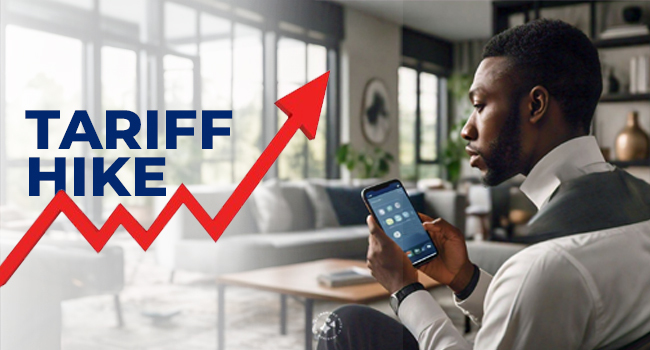
Following several months of agitation by telecommunications Mobile Network Operators (MNOs), the nation’s telecoms regulator, the Nigerian Communications Commission (NCC), has approved tariff increase for calls and data services.
In a statement released today, and signed by the Commission’s Director of Public Relations, Reuben Muoka, the NCC, saddled with the power under Section 108 of the Nigerian Communications Act, 2003 (NCA), to regulate and approve tariff rates and charges by telecommunications operators, decided to grant approval for tariff adjustment requests by Network Operators in response to prevailing market conditions.
The Statement further noted that against the request for a 100% increase in tariff by some network operators, the Commission decided to cap it at a maximum of 50% of current tariffs, a decision that took into account ongoing industry reforms that will positively influence sustainability.
These adjustments, the Commission insists, will remain within the tariff bands stipulated in the 2013 NCC Cost Study, and requests will be reviewed on a case-by-case basis as is the Commission’s standard practice for tariff reviews. It will be implemented in strict adherence to the recently issued NCC Guidance on Tariff Simplification, 2024.

“Tariff rates have remained static since 2013, despite the increasing costs of operation faced by telecom operators. The approved adjustment is aimed at addressing the significant gap between operational costs and current tariffs while ensuring that the delivery of services to consumers is not compromised.
These adjustments will support the ability of operators to continue investing in infrastructure and innovation, ultimately benefiting consumers through improved services and connectivity, including better network quality, enhanced customer service, and greater coverage,” the Statement assured.
The Commission was however silent on the implementation date and a breakdown of the tariff segments.
The NCC empathized with the consuming public, but noted that the decision was made after extensive consultations with key stakeholders across the public and private sectors.
“The NCC has prioritised striking a balance between protecting telecom consumers and ensuring the sustainability of the industry, including the thousands of indigenous vendors and suppliers who form a critical part of the telecommunications ecosystem.
The NCC recognises the financial pressures faced by Nigerian households and businesses and remains deeply empathetic to the impact of tariff adjustments. To this end, the Commission has mandated that operators implement these adjustments transparently and in a manner that is fair to consumers. Operators are also required to educate and inform the public about the new rates while demonstrating measurable improvements in service delivery,” the Commission noted.
Beyond protecting consumers, the Commission’s actions are designed to ensure the long-term sustainability of the industry, support indigenous vendors and suppliers, and promote the overall growth of Nigeria’s digital economy.
While reaffirming its dedication to “fostering a resilient, innovative, and inclusive telecommunications sector, the regulator noted that it will continue to engage with stakeholders to create a telecommunications environment that works for everyone, “one that protects consumers, supports operators, and sustains the ecosystem that drives connectivity across the nation.”