The Nigerian Communications Commission (NCC) has strengthened efforts to move Nigeria from awareness to practical adoption of Universal Acceptance (UA), urging organisations and technology developers to ensure their digital systems can recognise and process domain names and email addresses in different languages and scripts.
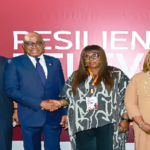
The Commission made the call on Thursday at a Universal Acceptance Workshop organised in Lagos in partnership with the Internet Corporation for Assigned Names and Numbers (ICANN) and Upperlink, noting that UA remains critical to building a more inclusive and globally connected digital ecosystem.
Head of Internet Infrastructure Unit at the NCC, Opeolu Oyebanji, speaking at the workshop, said Universal Acceptance presented an important opportunity for a multilingual country like Nigeria to make the internet more accessible and relevant to a wider population.
According to him: “UA ensures that valid domain names and email addresses can be accepted, validated, processed, stored, and displayed correctly by Internet-enabled applications, devices and systems, regardless of their length, language or script.”

Oyebanji explained that the initiative aligns with the Commission’s focus on improving digital experience, strengthening industry resilience and supporting inclusive digital services, while also creating opportunities for businesses, developers and innovators.
He noted that achieving Universal Acceptance must go beyond awareness, insisting that websites, applications and email systems must be tested and upgraded where necessary. He added that UA readiness should become part of system design, software development, procurement and digital service delivery.
Oyebanji said the workshop followed previous awareness sessions in 2023 and 2024, but was designed separately to deepen the conversation by identifying technical barriers and encouraging practical adoption.
On his part, Director, Stakeholder Engagement & Operations – Africa at ICANN, Yaovi Atohun, said the rapid expansion of domain names, including those using non-Latin scripts and longer characters, made it increasingly important for digital systems to support users irrespective of their language.
“Domain names are becoming longer and are now available in different scripts and can sometimes create challenges for communication,” he said.
Atohun said the workshop allowed participants to assess the readiness of some platforms and email systems, adding that many organisations already had systems capable of supporting internationalised email addresses, while solutions were available for those that were not yet ready.
He encouraged organisations to involve their technical teams in the process, noting that UA was not solely a government responsibility.
“If the answer is no, they can direct their technical teams to the ICANN website and other available resources,” Atohun said, urging stakeholders to share the knowledge gained from the workshop.
Oluseun Taylor, who spoke for Upperlink, said the push for UA is also aimed at ensuring that Nigeria does not find itself unprepared when new opportunities emerge.
Taylor cited the potential business implications with a scenario involving a Nigerian company seeking to transact with a business in Qatar whose website and email addresses use Arabic characters.
“If they send me an email, and I never get the email, because my email server does not accept Arabic emails. Does that mean that my $2 billion business will crash just because of that silly little thing? No. So, that’s basically what we’re talking about,” he said.
He acknowledged that the immediate demand for indigenous-language domain names within Nigeria may still be limited because many Nigerians do not routinely type in Yoruba, Igbo or Hausa scripts, but argued that this should not discourage investment in UA readiness.
“So in as much as, yeah, there’s not a big need, or there’s not a big demand for it right now. Let our systems be ready for something that we may need in the future. And you just never know,” Taylor said.
Meanwhile, the NCC noted that Universal Acceptance is not merely about accommodating different languages online, but ensuring that Nigeria’s digital infrastructure remains interoperable and capable of supporting international communication and future economic opportunities.
The Commission said its next steps would include continued engagement with stakeholders and organisations whose systems require improvement, with ICANN expected to provide technical support where necessary.