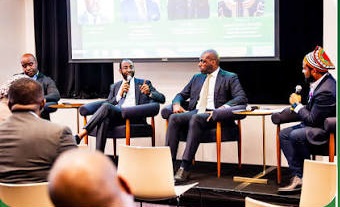
The Director-General/CEO of the National Information Technology Development Agency (NITDA), Kashifu Inuwa Abdullahi, participated in the high-level panel session, under the theme, “Identity in Action and Access to the Digital Economy,” convened by the National Identity Management Commission (NIMC) as part of discussions on “The Digital Public Ecosystem ; Identity, Trust & Inclusive Access.”
The DG joined Deputy Chief of Staff to the President, Federal Republic of Nigeria, Sen. Ibrahim Hassan Hadejia; National Co-ordinator, Renewed Hope – National Home-Grown School Feeding Programme, Aderemi Adebowale; and Co-founder & Chief Executive Officer, Flutterwave Olugbenga Agboola. The session was moderated by Executive Director, Technology for Social Change and Development (Tech4Dev), Diwura Oladepo.
Speaking on how Nigeria can leverage digital identity to expand access to services and strengthen interoperable Digital Public Infrastructure, Abdullahi described digital identity as much more than a card or identification number:
“Digital identity is the trust layer of the digital economy.”

He explained that trusted digital identity can transform the innovation landscape by allowing authorised innovators and service providers to build on foundational identity infrastructure rather than repeatedly creating fragmented identity systems. This can enable faster customer onboarding, reduce verification costs and extend trusted digital services across fintech, health, education, agriculture, insurance and government services.
Using practical illustrations, the DG demonstrated how interoperable infrastructure could enable a farmer to establish identity through the NIN, verify eligibility through an agricultural platform, receive support through a payment rail, and interact with authorised government systems through trusted data exchange, without repeatedly submitting the same information to multiple institutions.
The DG emphasised that Nigeria’s next challenge is to convert the growing scale of digital identity into trusted utility moving progressively.
The central message, he said, was clear – “Digital identity is not the destination; it is the doorway.”
He further explained that the goal is not simply to identify Nigerians, but to create a trusted, secure and interoperable digital ecosystem that enables every Nigerian, regardless of geography, gender or economic status ; to access services, participate safely in the digital economy and unlock new opportunities.
UNGA81: NITDA DG Champions Digital Identity As Trust Layer For Nigeria’s Digital Economy
The Director-General/CEO of the National Information Technology Development Agency (NITDA), Kashifu Inuwa Abdullahi, participated in the high-level panel session, under the theme, “Identity in Action and Access to the Digital Economy,” convened by the National Identity Management Commission (NIMC) as part of discussions on “The Digital Public Ecosystem ; Identity, Trust & Inclusive Access.”
The DG joined Deputy Chief of Staff to the President, Federal Republic of Nigeria, Sen. Ibrahim Hassan Hadejia; National Co-ordinator, Renewed Hope – National Home-Grown School Feeding Programme, Aderemi Adebowale; and Co-founder & Chief Executive Officer, Flutterwave Olugbenga Agboola. The session was moderated by Executive Director, Technology for Social Change and Development (Tech4Dev), Diwura Oladepo.
Speaking on how Nigeria can leverage digital identity to expand access to services and strengthen interoperable Digital Public Infrastructure, Abdullahi described digital identity as much more than a card or identification number:
“Digital identity is the trust layer of the digital economy.”
He explained that trusted digital identity can transform the innovation landscape by allowing authorised innovators and service providers to build on foundational identity infrastructure rather than repeatedly creating fragmented identity systems. This can enable faster customer onboarding, reduce verification costs and extend trusted digital services across fintech, health, education, agriculture, insurance and government services.
Using practical illustrations, the DG demonstrated how interoperable infrastructure could enable a farmer to establish identity through the NIN, verify eligibility through an agricultural platform, receive support through a payment rail, and interact with authorised government systems through trusted data exchange, without repeatedly submitting the same information to multiple institutions.
The DG emphasised that Nigeria’s next challenge is to convert the growing scale of digital identity into trusted utility moving progressively.
The central message, he said, was clear – “Digital identity is not the destination; it is the doorway.”
He further explained that the goal is not simply to identify Nigerians, but to create a trusted, secure and interoperable digital ecosystem that enables every Nigerian, regardless of geography, gender or economic status ; to access services, participate safely in the digital economy and unlock new opportunities.