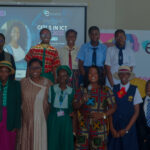
OpenAI has emphasised the urgent need for inclusive collaboration to expand access to artificial intelligence (AI) education across Africa, starting with Nigeria’s academic community.
In partnership with the AI giant, the University of Lagos (UNILAG) hosted the continent’s first OpenAI Academy, aimed at enhancing AI literacy and empowering African innovators.
The programme took place on October 16 and 17, 2025, as part of the University’s 5th International Week themed “Equitable Partnerships and the Future of AI in Africa.” Students, faculty members, and tech leaders were present to explore the opportunities and ethical challenges of AI on the continent.
Speaking during the interactive session at UNILAG, Africa lead at OpenAI, Emmanuel Lubanzadio, said: “This collaboration is important. There’s a sense of urgency to act, not tomorrow, not yesterday, but now.”

The initiative was led by UNILAG’s Office of International Relations, Partnerships and Prospects (IRPP) in collaboration with the African Engineering and Technology Network (Afretec).
It aligns with both the African Union’s Digital Transformation Strategy (2020–2030) and Nigeria’s National Digital Economy Policy, which prioritise inclusive digital skills and ethical innovation.
Director of the Institute for Research on Public Policy (IRPP), Professor Ismail Ibraheem, said the partnership reveals the University’s global outlook and commitment to locally relevant impact.
“At the University of Lagos, we are intentional about preparing our students to solve the unique needs of our continent through global partnerships. We prioritise inclusive access to digital skills, research, and learning opportunities to empower future innovators. Our goal is to help them approach AI with contextual understanding and ethical responsibility,” he stated.
The OpenAI Academy is a core part of OpenAI’s education mission launched in 2024 to make AI literacy accessible to everyone through free workshops, hands-on sessions, and community-driven learning.
The Lagos edition, its debut in Africa, featured practical sessions on machine learning, generative AI, AI ethics, responsible innovation, and real-world applications for African contexts.
Lubanzadio described the launch as both a milestone and a call to action for inclusive development.
“Africa is home to some of the world’s most creative, resourceful problem-solvers. We want to make sure they have the tools to turn their ideas into impact.
“Launching the OpenAI Academy in Lagos is a major step toward supporting the next generation of African innovators, giving them practical skills, connecting them to a global community, and helping ensure that AI reflects African voices and priorities,” he said.
Lubanzadio noted that while UNILAG is the first partner in Nigeria, OpenAI has a bigger goal to expand AI access and literacy across Africa. “You have to start somewhere. Our vision is that AI becomes as accessible as electricity, something everyone can use. But access or AI literacy is not one company’s responsibility. It has to be a multi-stakeholder approach.”
The sessions engaged lecturers and students on AI’s role in education, innovation, and societal development. Conversations ranged from ethical use in academic work to AI’s potential in agriculture, healthcare, and local language preservation.
The Lagos event, which coincided with OpenAI’s rollout of ChatGPT Go, a new, lower-cost subscription tier available in Nigeria and 56 other countries, stresses a growing focus on Africa as an important part of the global AI conversation.
Lubanzadio concluded that this collaboration is “only the beginning” of OpenAI’s long-term engagement with African academia.