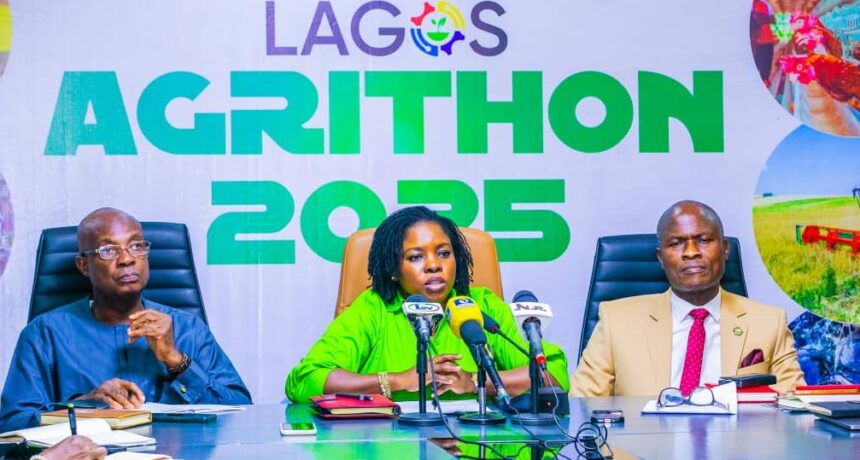
The Lagos State Government, through its Ministry of Agriculture and Food Systems, has opened applications for Lagos Agrithon 2025 to support youth-led agric-based ventures.
Lagos state Commissioner for Agriculture and Food Systems, Abisola Olusanya, revealed during a press briefing on Monday in Lagos, that the initiative is designed to support youth-led agribusiness with grants totaling N150 million.
She stated that the initiative aims to support at least 35 promising agrifood startups and youth-led ventures across the state.
Speaking on the initiative’s bigger mission, she said: “Lagos must act boldly – leveraging policy, partnerships, and innovation to secure the future of food for its people, this is why Lagos agrithon was born.

“Lagos Agrithon is more than a contest. It is a movement. A platform for bold ideas, for youth-led innovation, and for scalable solutions that tackle the food challenges of today and anticipate those of the future.”
Applications opened on June 2, 2025, and will close on June 27, 2025. Eligible applicants must be aged between 18 and 40 years, and must meet the following criteria:
- Have operated a startup within the agriculture and food systems sector for 0 to 5 years
- Be based in Lagos or demonstrate measurable impact within the state
- Be registered with the Corporate Affairs Commission (CAC)
- Be enrolled with the Lagos State Residents Registration Agency (LASRRA)
- Applicants must also submit a pitch deck outlining the problem addressed, proposed solution, and anticipated impact of their innovation.
In addition to financial support, Lagos Agrithon will provide participants with mentorship, networking opportunities with investors and industry experts, and access to a rich support ecosystem. The program will culminate in a Grand Finale where selected startups will pitch their solutions.
The focal areas for the Agrithon 2025 will include:
- Urban and vertical farming
- Aquaculture and fisheries advancement
- Youth and women-led agribusiness empowerment
The initiative was designed in response to the challenges of food insecurity and climate change, and aligns with the state’s goal to boost agricultural resilience and youth participation in agritech.