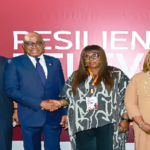
The National Agency for Science and Engineering Infrastructure (NASENI) is today, September 4, 2026, marking three years of institutional transformation under its Executive Vice Chairman/Chief Executive Officer, Mr. Khalil Suleiman Halilu, highlighting reforms, products, projects and strategic partnerships advancing Nigeria’s industrialisation agenda.
Since assuming office in September 2023, Halilu has led the repositioning of NASENI as Nigeria’s primary technology-transfer and commercialisation agency, in line with the Renewed Hope Agenda of President Bola Ahmed Tinubu, GCFR.
The new direction is focused on closing the gap between Nigeria’s research capacity and its industrial output by connecting innovation, infrastructure, skilled manpower, finance, manufacturing and market access.
Speaking on the milestone, Halilu said Nigeria has never lacked ideas or technical talent, but has struggled to translate them into commercially viable products and industries.

“Nigeria has capable engineers, researchers and innovators. What has often been missing is a connected system that can identify promising ideas, develop them, finance them, manufacture them and take them to the market. Closing that gap has defined our work at NASENI over the past three years,” he said.
Institutional Reform As the Foundation
NASENI began its transformation by strengthening its internal systems and introducing a more accountable and results-driven approach to project implementation. The Agency established Project Management and Implementation Management Offices, reoriented its budget towards measurable deliverables, strengthened internal audit and reporting systems, digitised key processes and introduced an Enterprise Resource Planning system to improve efficiency and institutional accountability.
These reforms have been complemented by new frameworks for accelerated technology transfer, green industrial development and innovation commercialisation. NASENI’s operating model is built around three principles: Creation, Collaboration and Commercialisation. Under this framework, the Agency creates and adapts technologies that respond to national needs, collaborates with partners that provide expertise, capital and market access, and commercialises viable innovations so they can become products, enterprises, factories and jobs.
NASENI’s Research Commercialisation Grant Programme supports applied research with market potential, while DELT-Her provides targeted funding, mentorship and commercialisation opportunities to women in engineering.
In 2025, NASENI awarded ₦229 million to 14 researchers under its research commercialisation programme, supporting projects across agriculture, clean energy, healthcare, mobility and digital security. The Agency is also implementing DELTA-2, a Nigeria–Czech Republic programme supporting applied research, experimental development and technology transfer.
Other initiatives include FutureMakers, which introduces children and young people to science, technology, engineering and mathematics; SheFly, which trains women in drone technology; and the Reverse Japa Programme, which seeks to reconnect Nigerian researchers and innovators abroad with opportunities at home.
NASENI HoldCo is being positioned as the commercial vehicle for market-ready technologies, while the NASENI Showroom provides a permanent platform where investors, procurement institutions and members of the public can interact with locally developed products.
According to Halilu, the strength of the model lies in the connection between its components. “A competition can discover an inventor, but that inventor still needs product-development support, finance, manufacturing capacity and access to customers. We are building these components as one connected system rather than as isolated programmes,” he said.
NASENI has developed and introduced more than 40 products across renewable energy, mobility, agriculture, healthcare, information technology, home appliances, clean cooking and education.
Beyond product development, the Agency is investing in industrial platforms capable of supporting local manufacturing, testing and technology adaptation.
The 40-hectare Solar Industrial Park in Gora, Nasarawa State, is being developed as an integrated platform for solar research, manufacturing, testing and deployment. NASENI DevFrontier is advancing local solar streetlight production, while NASRacks is being established to manufacture solar mounting structures.
Partnerships for Technology Transfer
Over the period, NASENI has established more than 50 local and international partnerships across renewable energy, automotive technology, agriculture, health manufacturing, defense, aerospace, research and commercialisation. Its partners include public institutions, private companies, universities, research organisations and international technology firms.
The Agency said the value of these partnerships would be measured not by the number of agreements signed, but by the technology transferred, skills developed, production capacity established, investment mobilised and products delivered. Through its collaboration with the Bureau of Public Procurement and other public institutions, NASENI is also supporting the Nigeria First policy by promoting the adoption of credible locally developed technologies.
The Next Phase: Scale, Standards and Measurable Impact
NASENI said the next phase of its transformation would focus on scaling commercial production, deepening local content, improving standards and certification, increasing factory utilisation and expanding market adoption. The Agency will also strengthen the measurement of outcomes, including units produced and sold, direct jobs created, local suppliers engaged, import savings generated, people trained and employed, technologies transferred and private investment mobilised.
“The number of products, projects or partnerships is important, but it is not the final measure of success,” Halilu said. “The real test is whether our products are adopted, our factories operate sustainably, our partnerships transfer useful capabilities, our trainees secure livelihoods and more value remain within the Nigerian economy.