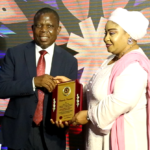
Nigerian Senator, Natasha Akpoti-Uduaghan has announced plans to roll out free public Wi-Fi across strategic locations in her Kogi Central constituency, in a move aimed at expanding digital access, empowering young people, and supporting the region’s growing creator economy.
The initiative is expected to be implemented in partnership with internet service providers, with connectivity infrastructure to be deployed in selected public spaces across the senatorial district.
According to the senator, the programme is designed to improve access to the internet for residents, especially youths, entrepreneurs, and content creators who increasingly depend on digital tools for education, business, and innovation.
Akpoti-Uduaghan disclosed the plan on her Facebook page after a recent visit to Idah Local Government Area in Kogi East, where she endorsed a similar proposal raised by local stakeholders.

She described internet access as a modern economic necessity capable of driving employment, enterprise growth, and digital participation.
Her remarks underscore a growing recognition among public officials that broadband connectivity is no longer a luxury but critical infrastructure for economic development.
Across Nigeria, access to affordable and reliable internet remains a major challenge, particularly outside major urban centres.
Many young people face high data costs, poor connectivity, and limited digital infrastructure, restricting opportunities in remote work, e-learning, e-commerce, and content creation. Public Wi-Fi initiatives such as the one proposed in Kogi Central can help bridge this divide.
The initiative will among other benefits:
- Lower the cost of internet access
- Enable online learning and digital skills acquisition
- Support small businesses and startups
- Help creators monetise online platforms
- Improve access to government and financial services
- For students and job seekers, such access can be transformational.
Senator Akpoti-Uduaghan also called for stronger cooperation among Kogi State’s three senatorial districts, Central, East, and West, arguing that development should be driven by collaboration rather than rivalry.
She said shared ideas and coordinated execution would produce faster progress for citizens across the state.
According to her, discussions with internet providers will begin immediately, while suitable locations for installation are being identified.
If successfully executed, the project could become a model for constituency-led digital infrastructure programmes in Nigeria.